A one-woman general contractor with beautiful work and almost no proof of it online. Five weeks later: a rebuilt brand, a live site with prices on the page, and three AI habits she runs from her truck. This is the first real Workflow Teardown, with the thinking left in.
SCOPEWorkflow Teardown, Brand, Website, AI Tooling
TEAM1 Owner, 1 Partner, Claude
01 — THE ROOM
Great Work, No Proof
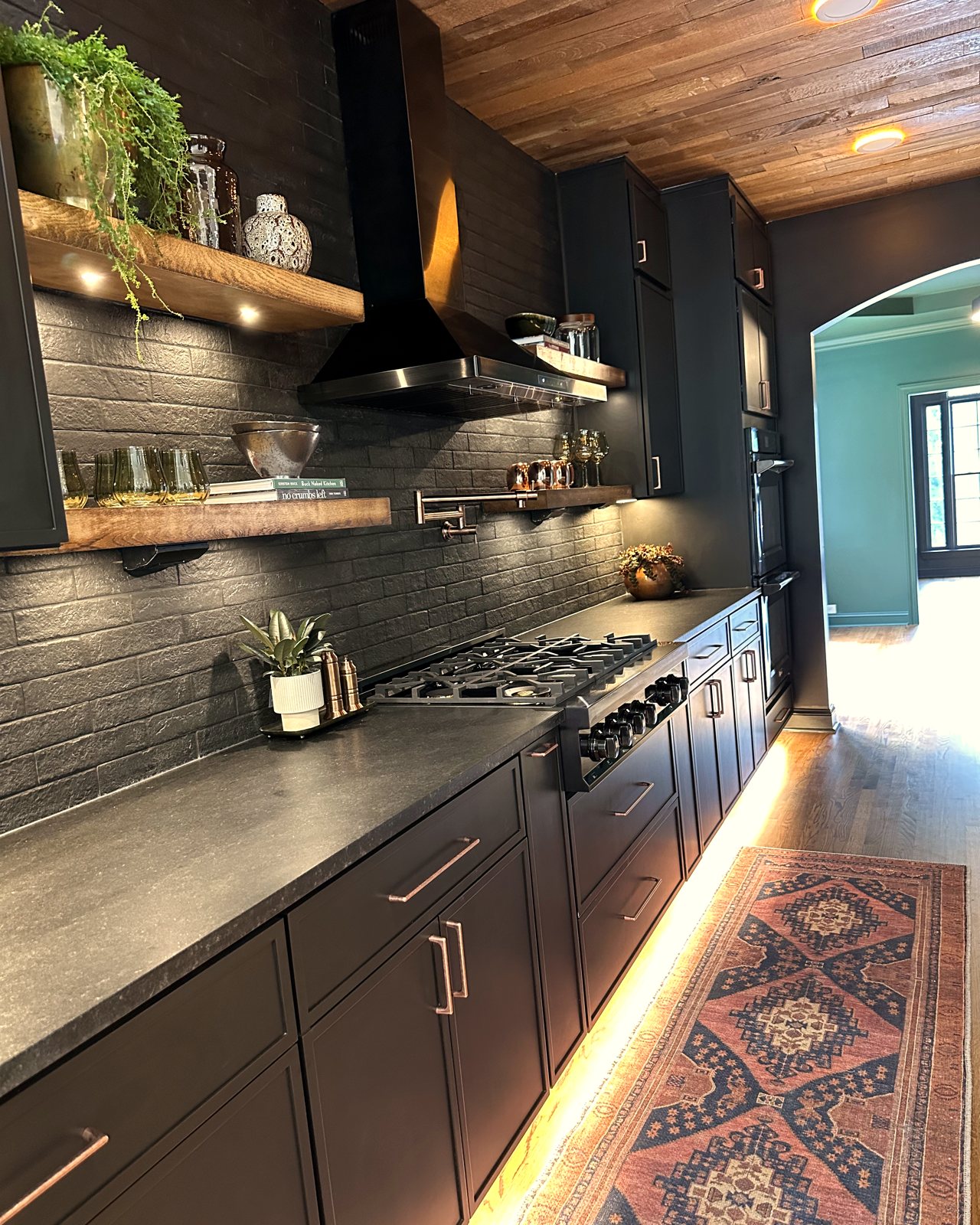
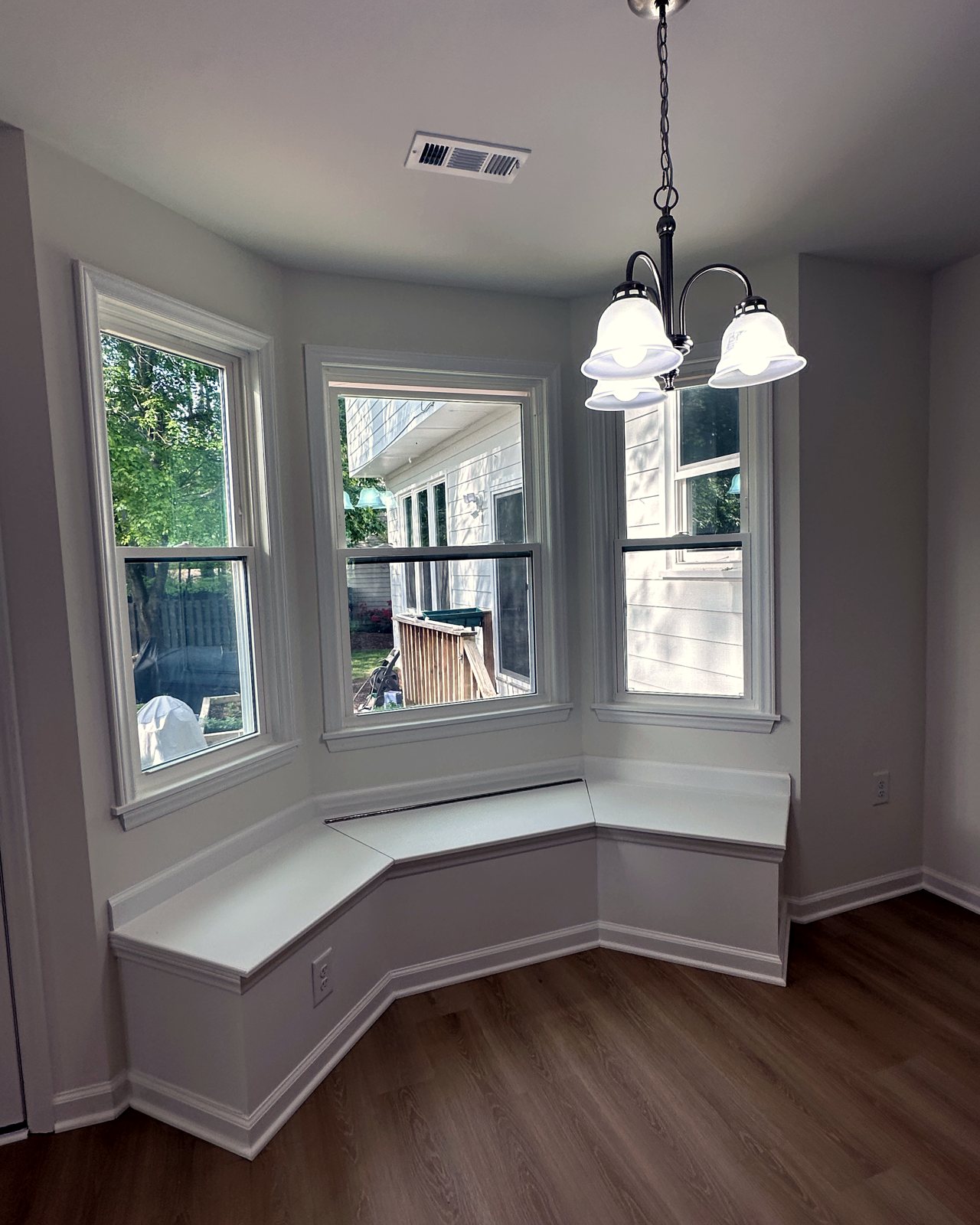
Ashley Fowler builds kitchens, baths, additions and whole houses across the Triangle, and has since 2015. She rebuilt my own home. Her old site said she did good work; it didn't show it. About ten blurry finished-only thumbnails, one testimonial, no pricing anywhere, and a contact form at the end of every path. Her Google reviews lived under a previous business name. And she was writing estimates at 9pm from a catalog, by hand.
The market study said the same thing from the other side. Nobody around her publishes prices. The remodelers winning local search win on reviews and city pages, not craft. The lane was wide open; she just had nothing on the shelf.
02 — THE TEARDOWN
Follow the Work, Find the Dread
The Workflow Teardown is three weeks: read the room, follow one job start to finish, spot the tells, sort by tier, score. Ashley's discovery session was a voice memo in her truck. What came out of it was a dread list, and the dread list became the plan.
Her top three: estimates at night, the client update she owed every week, and the review she never asked for at handoff. Underneath all three was the same thing. She says the important part out loud, in the truck or on the walkthrough, and then owes someone a version of it in writing. The tools had to start where her words already were.
The existing mark was a house outline that fell apart small. We rebuilt it as a vector lockup: a circle split down the middle, pine silhouette on the left, wood grain on the right, beside the name in a high-contrast serif. Six files, from full horizontal to mark-only reversed. A palette drawn from the materials she uses: Warm Ash, Pine Needle, Oak Bark, Clay Path, River Stone, Soft Coal. Type set as Instrument Serif for headlines and Metrophobic for body, with Inter for labels only, small and bold, no letterspacing.
04 — WEBSITE
From the First Sketch to the Last Coat
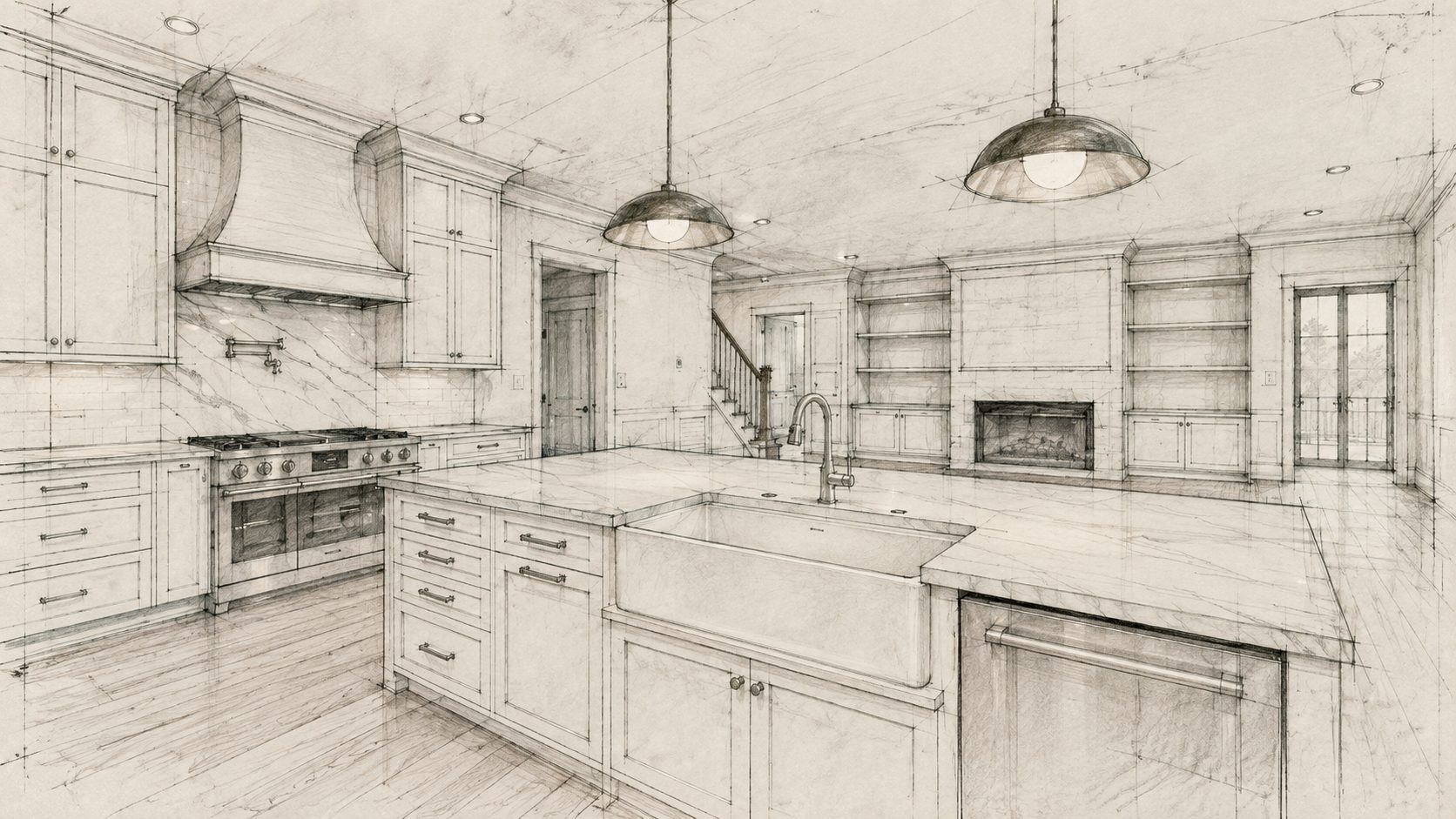
The homepage opens on a drag slider: a pencil sketch of a kitchen becomes the finished room. It's the whole business in one gesture. Below it, real prices where every competitor hides them (hall baths from $15k, primary from $20k, kitchens from $6,500), the four values as icons, a project trio, weekly updates promised in writing, and a contact section in Ashley's own words: "I do my best work in person."
SketchFinish
Nine pages, built first as static HTML so the design could be argued over, then rebuilt inside her live Wix site as hidden pages so nothing public changed until launch day. Every service page: copy on the left, a before/after slider or masonry grid on the right, pricing and FAQs beneath. Fifteen of her iPhone photos cleaned and cropped; the pro shots of her flagship custom build finally credited. Structured data on every page so Google and the AI assistants can quote her by name.
The rule for every tool: read-only first, approve before send, her voice or nothing, one habit at a time, on things she already pays for. Each one was installed in a single call and judged a week later by one number.
The Review Engine
One text at handoff and a follow-up four days later, saved as shortcuts on her phone, with a two-item template in JobTread so it never depends on memory. Her Google profile turned out to be the old business name with 24 reviews at 4.8 already on it; the engine's job is 50.
Ask JobTread Out Loud
Claude connected to her job system, read-only, inside a project whose instructions keep it that way and make it answer in spoken sentences. The morning habit: tap the mic in the truck, "What's on my list today?"
The Work Line
A business number in an app on her iPhone that Claude can read. Client texts and estimate-call transcripts in one place; replies, notes and the Friday update drafted for her to approve. Her personal number stays personal.
06 — WHAT CHANGED
So Far
4
Weeks from discovery to a live site
9
Pages, every one with prices and answers
3
AI habits, each installed in one call
It's early, and this page will say so until it isn't. The site went live on September 17. Search Console goes on this month and the first honest SEO read is late October. The review engine's number is reviews per month; the JobTread habit's number is whether she stops opening the app on her phone in the morning. What's already true: the shelf isn't empty anymore, and the tools she runs are the ones she asked for, in her own words.
“I want you to know I really appreciate everything you’ve done and been doing. I think you’re amazing at what you do.”
Ashley Fowler · Founder, Ash & Pine Construction
07 — WHAT I LEARNED
The Owner Is the Interface
Start where the words already are
Every tool that stuck began with something Ashley already says out loud. The ones that would have asked her to type, or open a new app, never made the list.
Read-only is a feature
The first week of any connector is trust-building, not automation. Letting it write before it has earned that is how owners end up turning the whole thing off.
Proof beats story
The brand story was the fun part. The reviews, the prices on the page and the structured data are what move a small business in search. Do the fun part second.
One habit a week
Three tools in one session is zero tools in a month. One tool, one call, one week of use, one fix. Then the next.